Pixel Tarot Blog
Tarot 101: The Suit of Cups
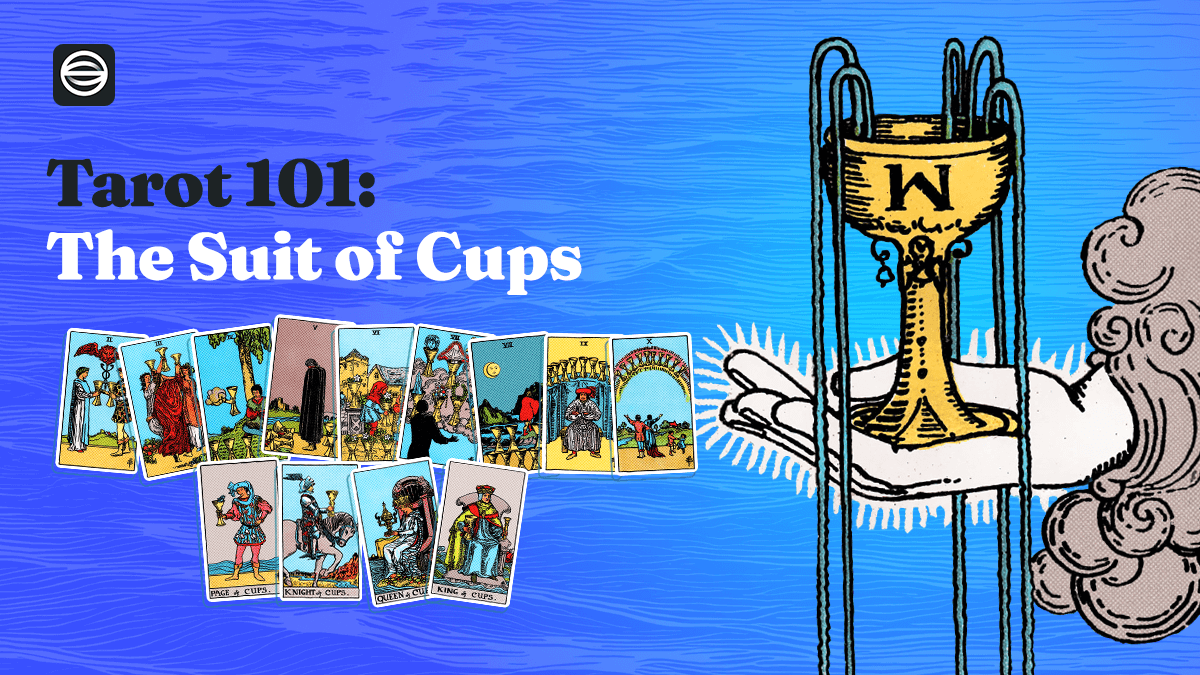
If the suit of Wands is fire in motion, the suit of Cups is water in motion. They are polar opposities in the elemental world. Fire is fast, water is slow. Water doesn’t interrupt the way fire does. It responds. It reflects. It reshapes over time.
Cups, as as suit, is about emotion, intuition, connection, and the inner world. This suit reminds us that feelings shift depending on context. They are shaped by our environment, bias, thought, and what’s going on inside us.
Cups: The Element of Water
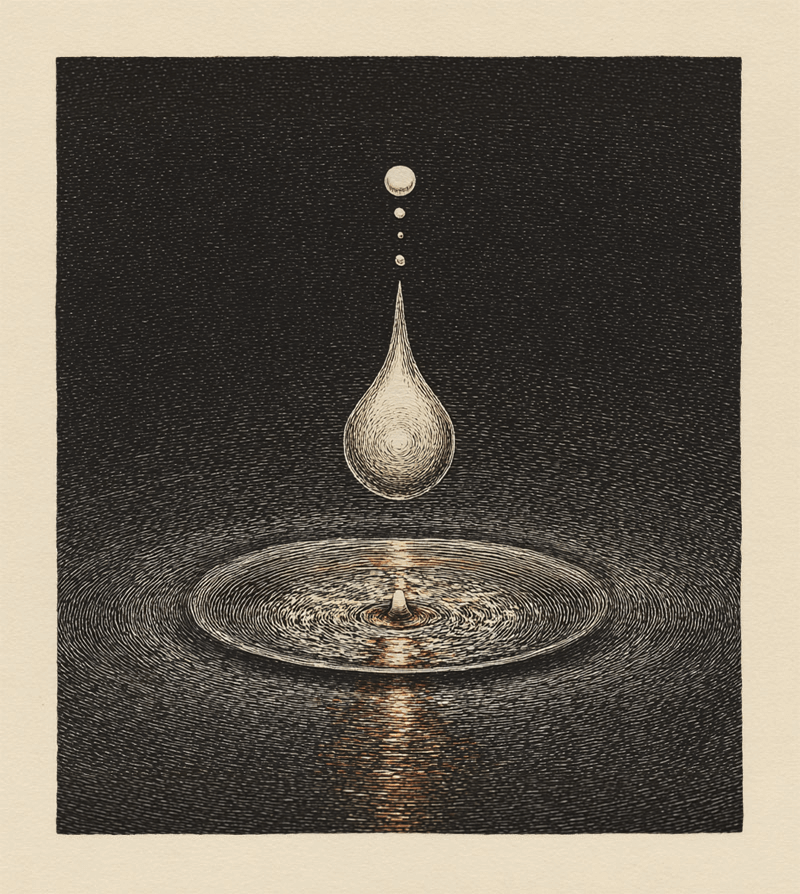 If you pour water into a glass, it takes on the shape of and, essentially, becomes the glass. Pour it into a bowl and it becomes the bowl. The water itself hasn’t changed; just the container.
Emotion tends to work the same way.
Any given experience can feel different depending on who you’re with, what you’re thinking, or what’s already happening beneath the surface. A comment can feel harmless one day and hurtful the next. A memory can feel warm and fuzzy sometimes and heavy at others. Context - the tiny details that color the situation - shapes the feeling.
As we age and mature, we begin to understand our feelings better than when when we were kids. We better understand reflection and learning from past experience. Water is naturally reflective when still. But when it’s disturbed, the image blurs and things can become, well... complicated.
Sometimes, before we can understand what we’re feeling, we have to let the surface settle. Afterall, Cups are not about predicting how you will feel. They are about understanding what you’re already feeling.
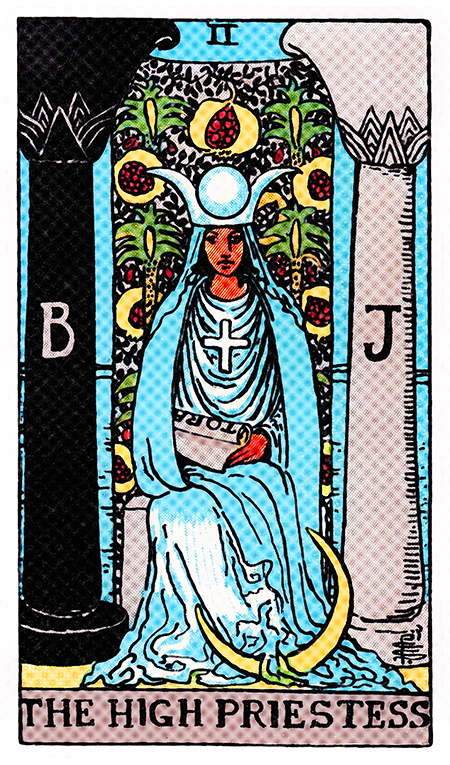 The Suit of Cups: Emotion + The High Priestess
The emotional qualities of the suit of Cups are also reflected in its traditional ruler, The High Priestess. This regal lady represents quiet awareness - the ability to notice what you’re feeling without needing to explain or defend it. She's often understood as the keeper of inner knowledge, a figure who listens to what is unseen and senses what is happening inside. It's not just about sitting in her feelings; she trusts her intuition and inner awareness. Her influence and energy can be felt in each of the cards in the suit of Cups.
If The Magician represents the spark that begins creation on The Fools Journey, The High Priestess represents what happens after the spark. She embodies gestation. Not the instant something begins, but the quiet development that follows. Growth that happens in darkness. Change that forms slowly and invisibly before it ever appears in the physical world.
Emotion in the suit of Cups works the same way. Feelings do not always explode outward. They gather and deepen. With Wands a feeling may ignite in an instant. But with Cups, they develop slowly over time. And like water held in a pitcher or a vase, emotion takes the shape of its environment and responds to what surrounds it.
Gestation, or internal growth, requires containment and patience. It requires trust that something meaningful is forming even when there is not necessarily visible proof. The High Priestess teaches that emotional growth works like this. Before clarity, there is reflection. And before expression, there is understanding.
In this sense, The High Priestess represents more than intuition. She embodies emotional depth, incubation, and the ability to sit with a feeling long enough for it to fully form. This same energy runs throughout the suit, especially in the Court cards, where empathy, imagination, and emotional awareness take center stage.
A Look at the Cards
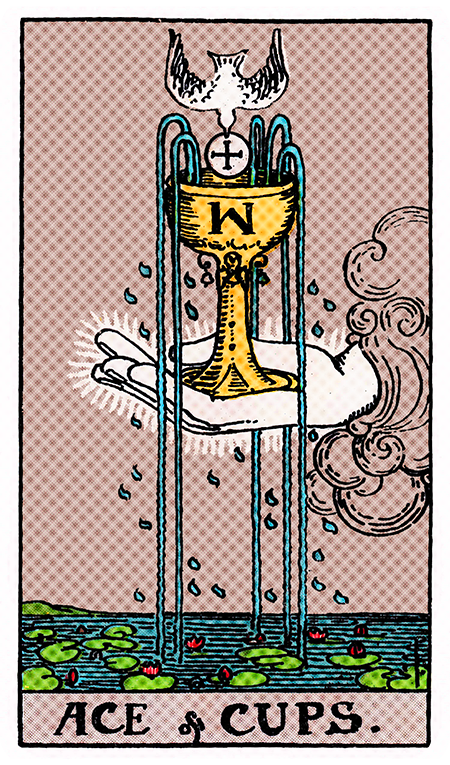 Ace of Cups
Water flowing. A new emotional experience begins. Something opens. This could be a new connection, creativity, compassion, or simply the willingness to feel. The container, whatever it is, is ready to be filled.
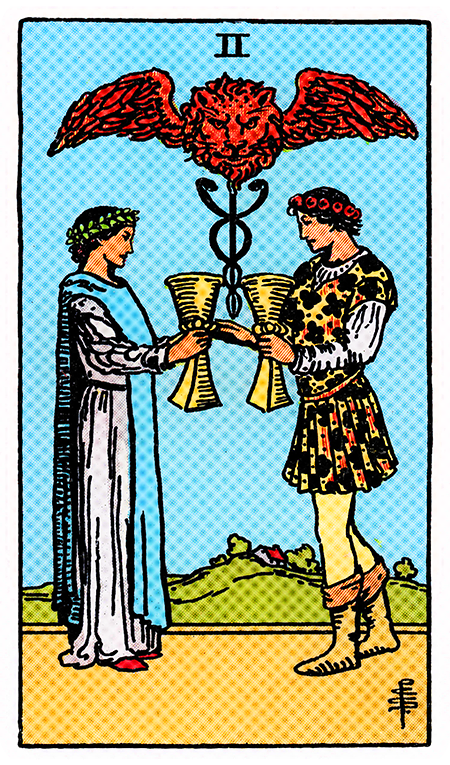 Two of Cups
Water shared. Two worlds connect. Each person’s feelings begin to respond to the other. This is mutual recognition and emotional exchange. This could be romantic, platonic, familial, or professional.
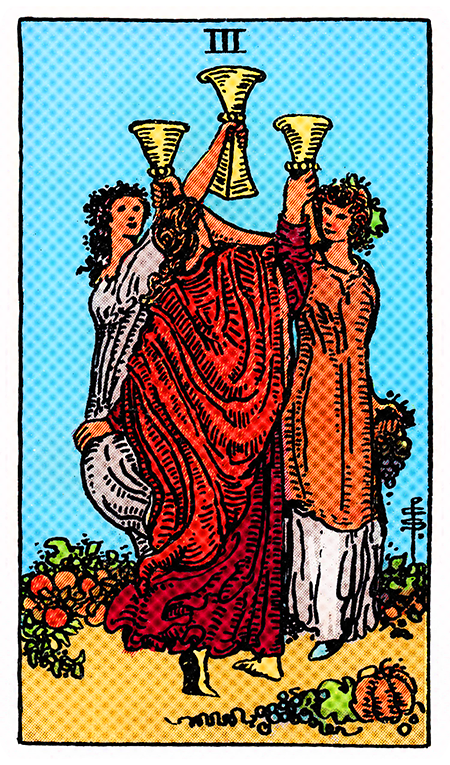 Three of Cups
Water gathering. Emotion expands outward into celebration and community. Feelings are shared freely and reinforced through connection. There is a sense of belonging, union, and common purpose.
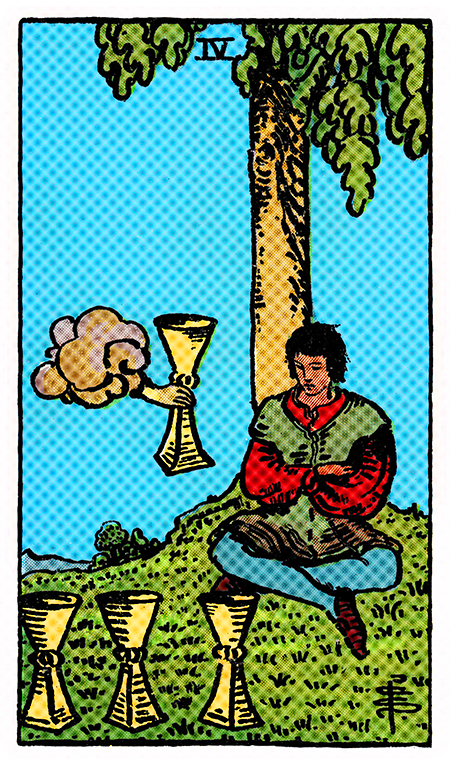 Four of Cups
Water ignored. An emotional offer is presented, but the container is unavailable or may no longer have the required capacity. The feeling exists, but there is resistance to engaging with it.
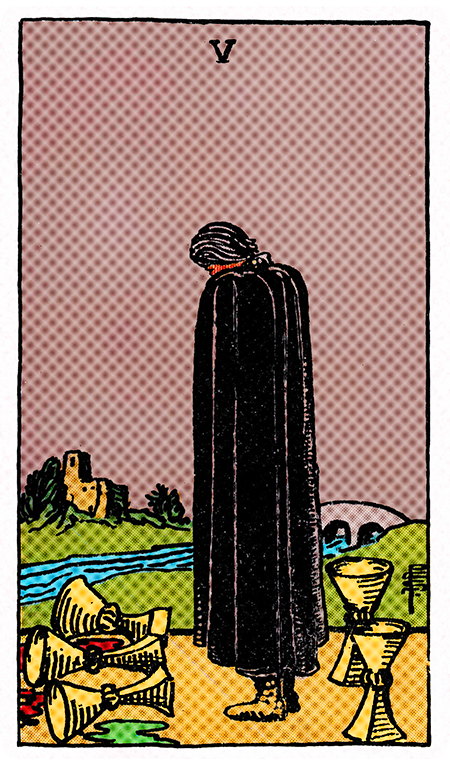 Five of Cups
Water spilled. Loss changes our emotional landscape. Attention focuses on what has spilled (or even voluntarily poured out), even though some water still remains.
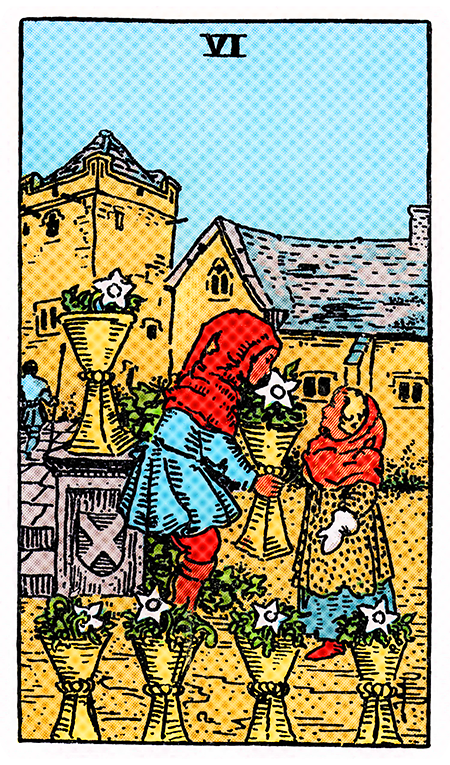 Six of Cups
Water remembered. Emotion flows backward into memory. The past shapes how the present feels as nostalgia for the past takes center stage. This blast from the past can be warm memories that inform tradition or conditioned learning that shapes bias.
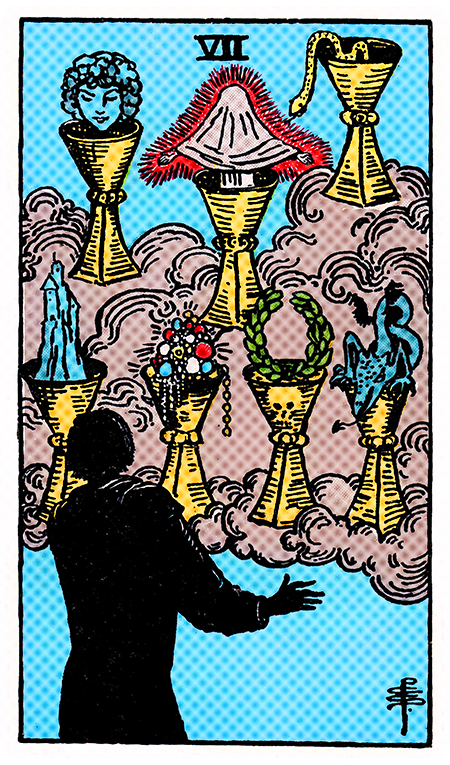 Seven of Cups
Water scattered. Too many possibilities create confusion. The surface becomes unclear, and it’s hard to know what is real. Choice fatigue is real, and being emotionally distracted and torn leads to upset and dismay. (This is why we shouldn't make big decisions when we are emotionally unsettled.)
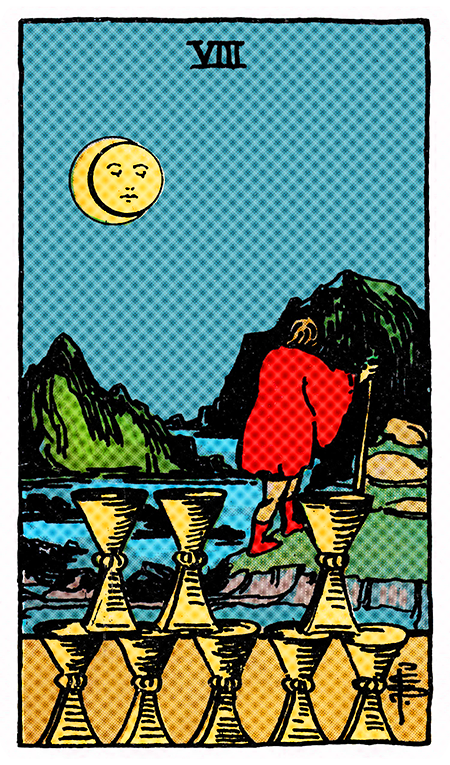 Eight of Cups
Water withdrawing. The tide pulls back from something that once felt full. This is the decision to leave, even when nothing is obviously wrong or missing. It takes courage and a strong heart to leave what is familiar to go in search of something that feels deeper and more true.
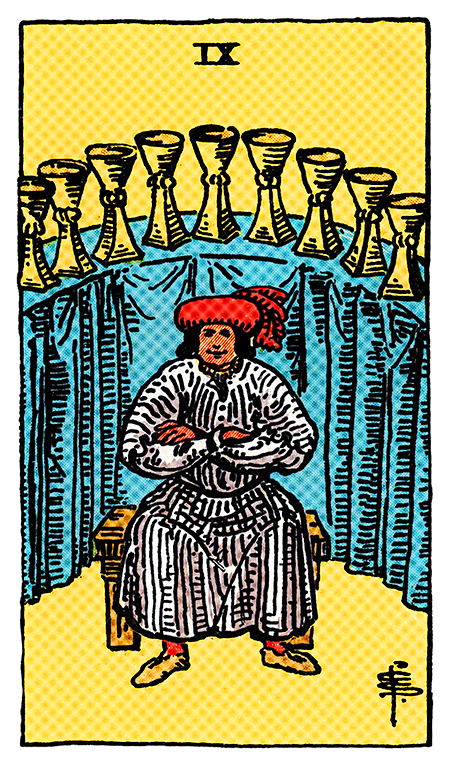 Nine of Cups
Water filled. The container is full. Emotional satisfaction and personal contentment are present. There is pride in what has been achieved, and it’s okay to enjoy that. Just be mindful that fulfillment doesn’t quietly turn into smugness or comparison.
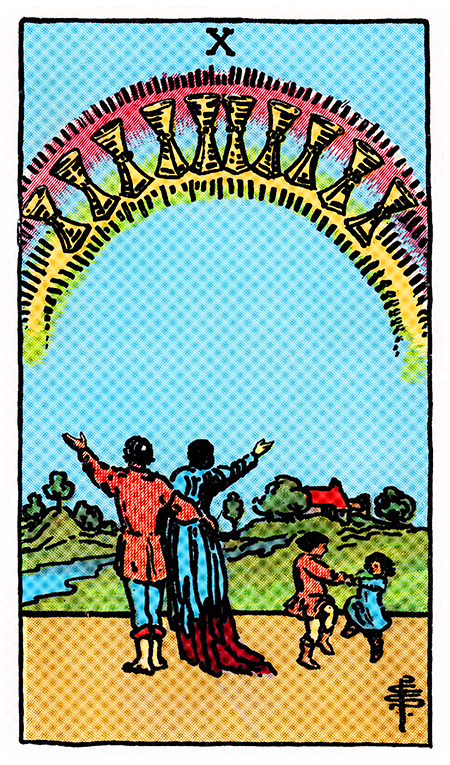 Ten of Cups
Water settled. The emotional environment is stable and shared. Harmony forms when feelings are supported and understood within a healthy container.
The Court of Tides
If the pip cards (Ace through Ten) of the suit of Cups show water in motion, the court cards show water personified. Here, emotion, intuition, and connection take on human form. The Page, Knight, Queen, and King of Cups represent different relationships to emotion, from curiosity and imagination to depth, compassion, and emotional maturity. Each role carries the same water, but works with it very differently.
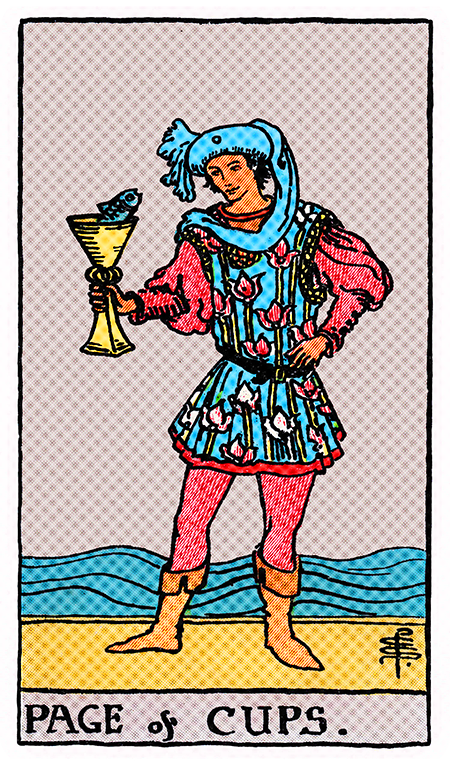 Page of Cups
Water awakening. This is emotion at the moment it first surprises you. The Page of Cups represents curiosity about feeling, imagination, and openness to what might be possible. Emotions here are gentle, new, and sometimes unexpected.
Water at this stage is sincere but still forming. It learns through daydreaming, creativity, and emotional honesty. The Page is not trying to control the feeling. He is simply noticing it and allowing it to exist.
Sometimes this card shows up when you’re realizing you care more than you thought you did. Or when a small feeling begins to grow into something meaningful. It’s the beginning of emotional awareness, not the final answer.
A great example of The Page of Cups would be Ariel (from Disney's The Little Mermaid). She's curious, dreamy, and drawn to possibility. Naive and optimistic, she tends to follow her feelings before fully thinking through the consequences.
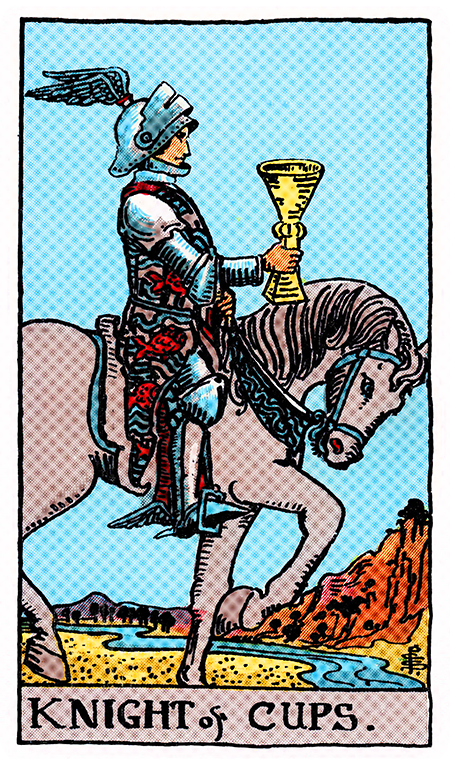 Knight of Cups
Water pursuing. This is emotion that moves outward in search of connection. The Knight of Cups represents romance, idealism, and the desire to follow the heart. Feelings here are expressive and sometimes dramatic.
Water at this stage flows strongly, but it can lose direction. The Knight may chase a feeling without questioning whether it is realistic or sustainable. Water (Emotion) can be beautiful and inspiring, but without keeping one foot on the dry land, it can drift or disappoint.
This is the part of us that wants the story to feel magical. But emotion alone isn’t always enough to carry something long-term. The Knight teaches us that following the heart is powerful, but it still needs clarity.
There are so many great examples of someone who could be a Knight of Cups. But I think Westley from The Princess Bride really personifies the Knight of Cups. He's romantic. Devoted. Driven by love. He would literally die (and does, more or less) for love. He's idealistic but sincere.
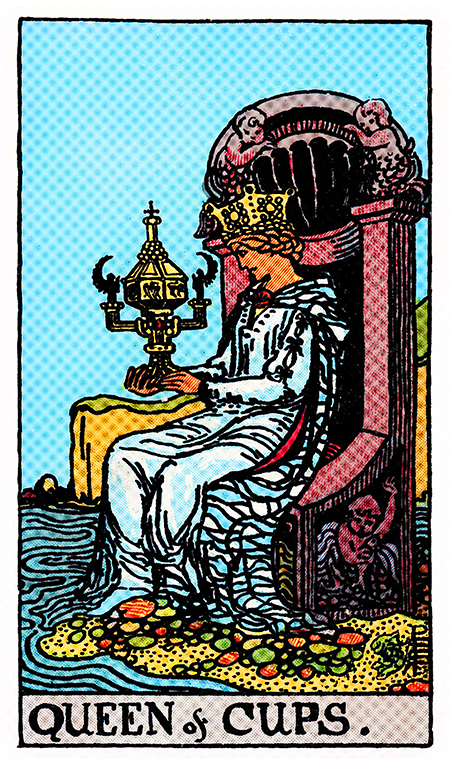 Queen of Cups
Water held. The Queen of Cups feels deeply, but she does not drown in emotion. She understands her feelings and respects the feelings of others. Compassion, empathy, and emotional awareness live here.
Water in the Queen is calm and reflective. She listens before reacting. She knows that emotion carries information, and she allows space for it to settle before responding.
She doesn’t rush to fix or judge. She creates space for feelings to exist. This is emotional strength that comes from understanding, not control.
A lovely example of someone who embodies the Queen of Cups is the Lady of Lothlórien, Galadriel (Lord of the Rings). She is calmly perceptive and emotionally aware. She shows empathy and understands people without being overwhelmed by them or their emotional circumstances.
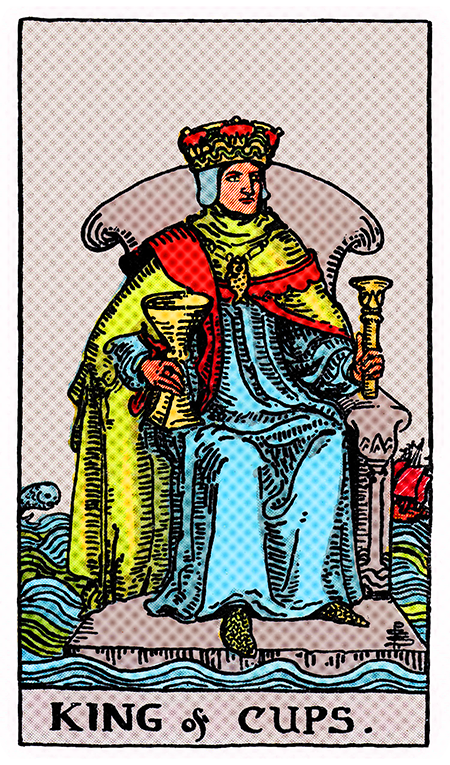 King of Cups
Water mastered. The King of Cups understands emotion without being controlled by it. He feels deeply, but he remains steady. This is emotional maturity, balance, and self-control. The King of Cups doesn’t suppress emotion. He understands it well enough that it doesn’t control him.
Water here is stable and contained. The King knows how to navigate strong feelings without suppressing them. He creates an emotional environment where others feel safe and understood.
He doesn’t ignore emotion, and he doesn’t explode with it. He responds with intention. This is the kind of steadiness that allows others to trust him.
A brilliant example of a King of Cups is Mufasa from Disney's The Lion King. He is warm, loving, and protective, just composed. He knows what Simba is capable of and encourages his growth. He leads with heart and wisdom, not ego or vanity.
When Water Overflows
We all know water is essential. We can’t live without it. And like fire, water is not neutral. When it isn’t contained or understood, the same force that supports connection and compassion can become overwhelming, cause mood swings, or emotional fatigue.
Water wants to respond. But without awareness, emotion can (and will) spill beyond its container. Feelings can grow larger than the situation. Context can blur. The surface becomes disturbed, and it becomes harder to see clearly.
In the suit of Cups, this can show up as becoming lost in fantasy, avoiding reality, holding onto the past too tightly, or letting emotion control decisions. Too much water can mean confusion, over-sensitivity, or difficulty setting boundaries. This is where journaling becomes useful. Writing slows the water down.
That’s why some Cups cards deal with illusion, disappointment, or emotional exhaustion. The lesson isn’t to shut emotion down. It’s to learn how to contain it. Water needs healthy boundaries, reflection, and clarity. Without those, empathy turns into self-sacrifice, imagination turns into escapism, and sensitivity turns into instability.
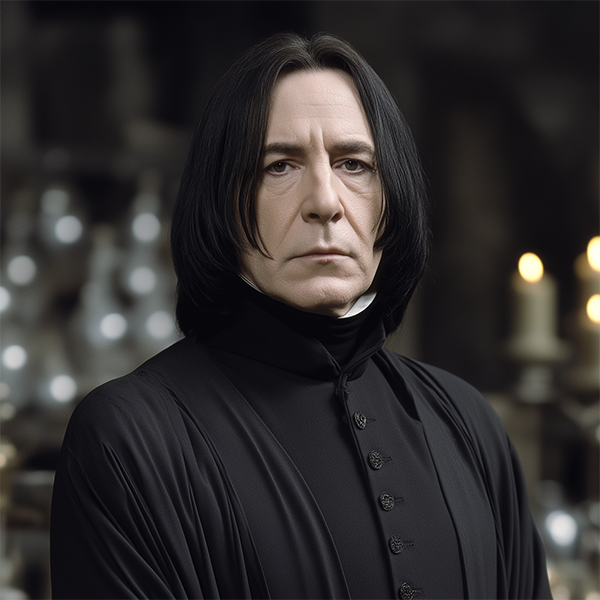
is Severus Snape.
Severus Snape from the ever-so-popular Harry Potter series. is a powerful example of what happens when emotion is controlled but never truly processed. He carried deep grief, regret, and unspoken love for years. Outwardly, he maintained composure and authority. He fulfilled his role with discipline and restraint.
But the emotional weight he refused to release hardened into bitterness. Instead of softening him, it sharpened him. His pain did not explode. It hardened and calcified.
This reflects the shadow side of water. When emotion is contained without healing, it does not disappear. It changes form from something that flows to somethign rigid and cold. The lesson is not to deny feeling, but to allow it to move. The King of Cups at his healthiest does not wall off his heart. He learns from it without letting it turn cold.
The Quiet Currents in the Suit of Cups
These details aren’t required to read Tarot well. You don’t need to memorize them or use them every time. They just add texture and contextto help with your readings.
Seasonally, the suit of Cups is linked to autumn. It’s a time when the days begin to shorten and attention turns inward. Autumn carries reflection, emotional shifts, and quiet transitions. Just as leaves fall and the year begins to soften, Cups invite us to notice what we’re feeling and why.
In traditional playing cards, Cups are connected to the suit of Hearts. Hearts deal with emotion, relationships, and connection. It’s another reminder that this suit is about feeling and response, not force or action. And yes, just like with Wands and Clubs, you can read Hearts in a standard deck if that’s what you have.
Zodiac Connections
Cups are associated with the water signs of the Zodiac: Cancer, Scorpio, and Pisces. Each one reflects a different way water can show up emotionally.
Cancer (June 21 – July 22) is connected to protection and emotional bonding. This is water that nurtures and holds close.
Scorpio (October 23 – November 21) represents emotional intensity and transformation. This is water that runs deep and changes what it touches.
Pisces (February 19 – March 20) is tied to imagination and sensitivity. This is water that dissolves boundaries and feels everything at once.
Again, these connections aren’t rules. They’re simply another lens you can use if it feels helpful. Tarot works best when it stays flexible, personal, and responsive, just like water itself.
Final Thoughts on the Suit of Cups
Across the Suit of Cups, we see water at every stage, from the first opening of emotion to the challenge of holding feeling with maturity and balance. The court cards show how water is expressed in human terms, from curiosity and imagination to compassion, depth, and emotional steadiness. The shadow side of Cups teaches us that emotion without boundaries can become overwhelming or cause confusion or even exhaustion.
You don’t need to master every detail to work with this suit. What matters most is noticing where emotion is showing up in your life and how context is shaping it. The suit of Cups doesn’t ask you to suppress emotion. It asks you to understand it.