Pixel Tarot Blog
Rethinking Manifestation
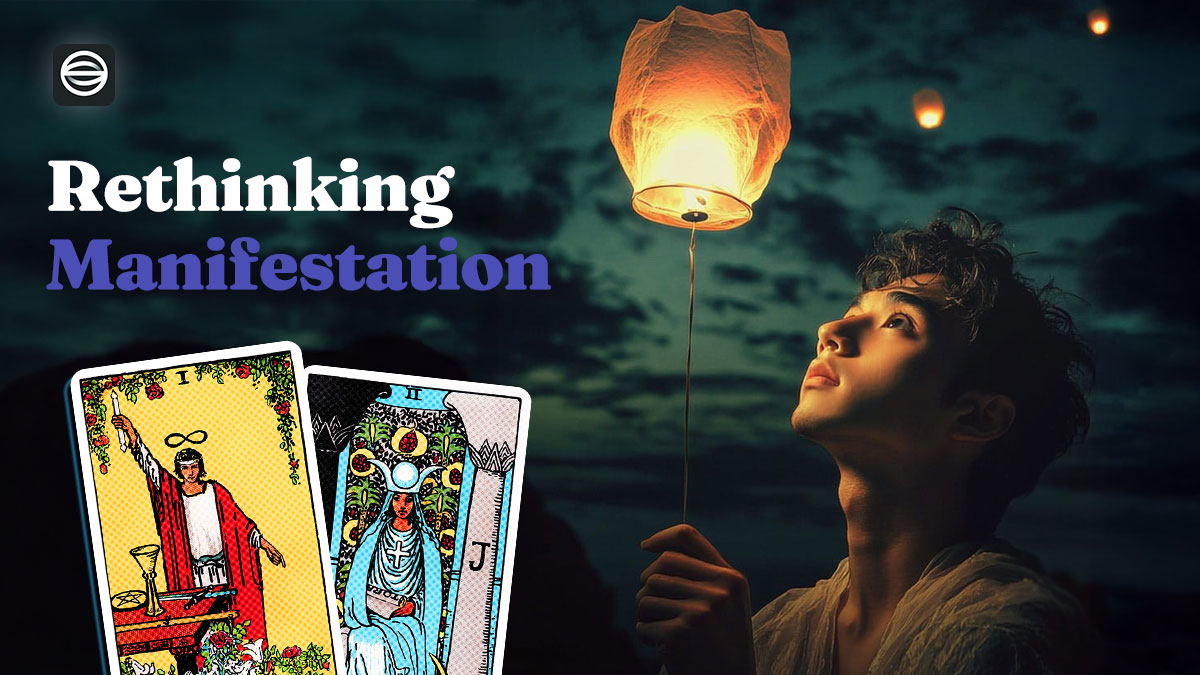
When people talk about manifestation, it’s often described like "Just put your thoughts out into the Universe and it will come to you." The so-called "Law of Attraction" says that you attract things into your life by thinking about them, and "The Secret" in the early 2000s commercialized on this concept.
The idea that we can just think things into existence sounds powerful and comforting, like there is total control through the simple of thinking.
But that's not how real life works.
Thoughts don't magically pull events and success towards you. What they do is change how your brain pays attention, how your body reacts, and willing you are to take action.
So What is Manifestation?

Manifestation is the practice of deliberately shaping your thoughts, emotions, and attention so that you behave differently over time, increasing the chances of certain outcomes while accepting that you can't control everything.
Manifestation is not about making things appear out of nowhere like some cosmic vending machine. It’s about how your repeated thoughts and feelings slowly change the way you see the world and how you respond to it. When you focus on something consistently, your brain starts treating it as important. That focus then affects your mood, your confidence, and your willingness to act, even when things feel uncomfortable or uncertain.
But manifestation also includes an important limit. Yes, you can influence your choices and your reactions, but you cannot control other people, luck, or the way life unfolds. Obviously, you can't magically heal someone just because you think long and hard enough. Practicing manifestation doesn’t mean everything will work out exactly as you hope. It just means you are choosing to show up with intention instead of drifting on autopilot.
The Ways We Practice Manifestation
The ways we practice manifestation are usually simple and ordinary. Things like vision boards, visualization, journaling, affirmations, prayer, or even quiet reflection all work in a similar way. They give your thoughts somewhere to land instead of letting them spin endlessly in the background.
Vision Boards + Visualizations
When you visualize something, you’re not sending a message to the universe. You’re helping your brain imagine a future that feels possible. That feeling matters because the brain tends to resist what feels unrealistic or abstract. Visualization helps lower that resistance by making your idea feel more familiar. Repetition keeps the idea in your mind and reinforces its importance and attention.
Journaling
Journaling works by slowing your thoughts down. When thoughts stay in your head, they can feel unorganized, shifty, and unimportant. Writing them out gives them shape. It helps you notice patterns in what you want, what you fear, and what you avoid. Over time, this kind of awareness can ultimately change how you make decisions.
Affirmations
Affirmations are often misunderstood as pretending something is true when it isn’t. I can't help but think of the Stuart Smalley skits on Saturday Night Live where Stuart stands in front of a mirror and says, "I'm good enough, I'm smart enough, and doggone it, people like me." The sketch is funny because it's an exaggerated idea that repeating something out loud will suddenly fix everything.
But real affirmations aren’t about forcing yourself to believe something you know isn’t true. They work best when they’re more honest and flexible. An affirmation isn’t meant to overwrite reality. Saying something like “I can figure this out,” or “I've handled worse than this before” doesn’t deny struggle or doubt. It keeps the focus on movement rather than self-criticism.
When used this way, affirmations aren’t about pretending. They’re just reminders. They help interrupt negative thought thinking and begin to impact how you respond to challenges (external or internal).
Prayer
 Prayer fits into this in a similar way, but it’s often more complicated than people admit. Many prayers are absolutely about specific outcomes. When you pray that "grandma gets better" or for things to "work out" or for pain to stop... that's wanting a real result, almost an intervention of sorts. And that isn't selfish or anything... that's just being human.
But at the same time, prayer often includes something else, even when a specific outcome is being asked for. It allows you to privately be honest about fear, hope, and uncertainty, while also recognizing that you don’t fully control what happens next. That combination matters. Asking for help while accepting limits can calm the mind and steady emotions.
In a sense, it's like manifestation with a base of humility. It often changes how you respond, even if the outcome you asked for doesn’t happen exactly as you hoped. It can make you more patient, more compassionate, or more willing to act where you can. In this way, prayer isn’t just about getting a result. It’s also about preparing you to face whatever result comes.
The Manifestation Feedback Loop: Intention - Emotion - Behavior - Outcome
Certainly manifestation doesn’t happen all at once. It works in a loop that repeats over time, ampliyfing with repetition. It usually starts with intention. Intention is simply deciding that something matters to you - your purpose, your desire. Once something matters, emotions get involved, and those emotions make action more likely. When something feels important, you’re more willing to try, practice, speak up, or face something you might otherwise avoid.
Those actions then influence outcomes, which then feed back into the manifestation loop. When something works, even a little, it strengthens the belief that change is possible. When it doesn’t, it still shapes your next intention by teaching you something. This is why manifestation isn’t a one time magic trick. It works more like habits that slowly change how you think, feel, and respond. And all that makes meaningful change more likely over time.
 Manifestation in Tarot
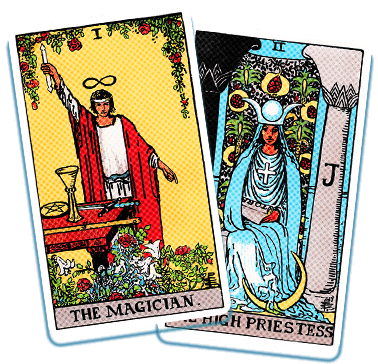
Manifestation also shows up clearly in Tarot, especially in The Magician and The High Priestess cards. The Magician represents focused attention and intentional action, using the tools already available instead of waiting for something magical to appear. The saying "As above, so below" is oftened tied to Magician as represents channeling our intentions into our actions.
The High Priestess, on the other hand, represents the inner side of the manifestation process: reflection, intuition, prayer, and honest self awareness. Together, they show that manifestation isn’t about control or wish fulfillment. It’s about knowing yourself well enough to act with purpose, and acting with enough awareness to stay aligned with what matters.
Manifestation Wrapped Up
At the end of the day, manifestation isn’t about controlling the universe or "getting what you want." It’s about choosing how you show up, about paying attention to what matters to you. It's working with your emotions instead of ignoring them, and taking responsibility for the choices you actually can make. Nothing about manifestation removes uncertainty, struggle, or failure. Life still happens.
What manifestation does offer is participation. Instead of waiting for things to change, you train yourself to notice, respond, and behave with intention. Whether you’re journaling, visualizing, praying, or just thinking things through, you’re shaping your inner world so you’re better prepared for the outer one. That doesn’t promise success by any means, but it does make growth possible. And really, isn't that the part that matters?